

Dialogic Pedagogy: Co-Creation, Praxis, and Wholeness
Jump to:
Introduction | My Why | My Philosophy | Learning Outcomes | Assessment | Conclusion
One of my favorite memories teaching yoga at Oregon Coast Community College was when a student responded to both the yogic principle of svadhyaya, or self-study (Sovik, 2014), and our semester-long journal project with an emphatic, “I hate self-reflection.” Amused, I responded, “Well, since you know that about yourself and are honest about it, you’ve actually got a head start!” Like The Rock seeking to psyche out his opponent in the wrestling wring, she cocked an eyebrow as she locked eyes with me, then smoothly returned to doodling in her gray notebook.

Despite her statement and seeming lack of attention, this student consistently surprised me with well-developed reflections, suggesting her defiant disdain for self-reflection masked someone who had confronted the sharper edges of being human. Though we never spoke about her entries face-to-face, our quiet written dialogue and in-class interactions allowed me to get to know her as a whole person and convey curiosity and respect for her lived experience. At the end of the semester, she thanked me for creating a space where she could share without fear of judgment, along with learning movement and breathing practices that helped her process difficult life experiences. Today, I thank her for showing me the power of showing up authentically, even if it challenges an institutional norm or authority (including myself).
As Dannels (2014) writes, “teaching is fundamentally relational and communicative” (p. 17). Over the past two decades, I’ve repeatedly lived this truth across my work as a community educator, crisis advocate, yoga instructor, and strategic project manager. Guided by these experiences, my core motivation for teaching is to co-create liberating, inclusive learning spaces where students can explore communication as the common ground of all human action (Fernback, 2014, p. 1) and recognize their own agency as knowledge and communication producers, critical thinkers, and society shapers.

Behind the Ivory Curtain: Deconstructing Power, Persuasion, and Media Messages
As a small-town, first-generation college student raised by working-class parents, my experience in higher education was my first transformative exposure to naming systemic power dynamics, practicing written and oral persuasion, and applying media literacy to everyday life and social issues. Along with serving as the foundation for my career, these early communication studies enabled me to feel confident using my voice, make sense of structural issues, and develop a lifelong passion for critical analysis and argumentation. Because of this, I want to teach students that rhetoric and media must be deployed and consumed critically, as personal, relational, and communal responsibilities that can be leveraged to advance social good.

My primary motivation as an educator is to help students recognize how power functions through discourse, deconstruct how media messages operate, and ethically harness their own voices for the public good—such as boldly speaking up against the genocide in Palestine..
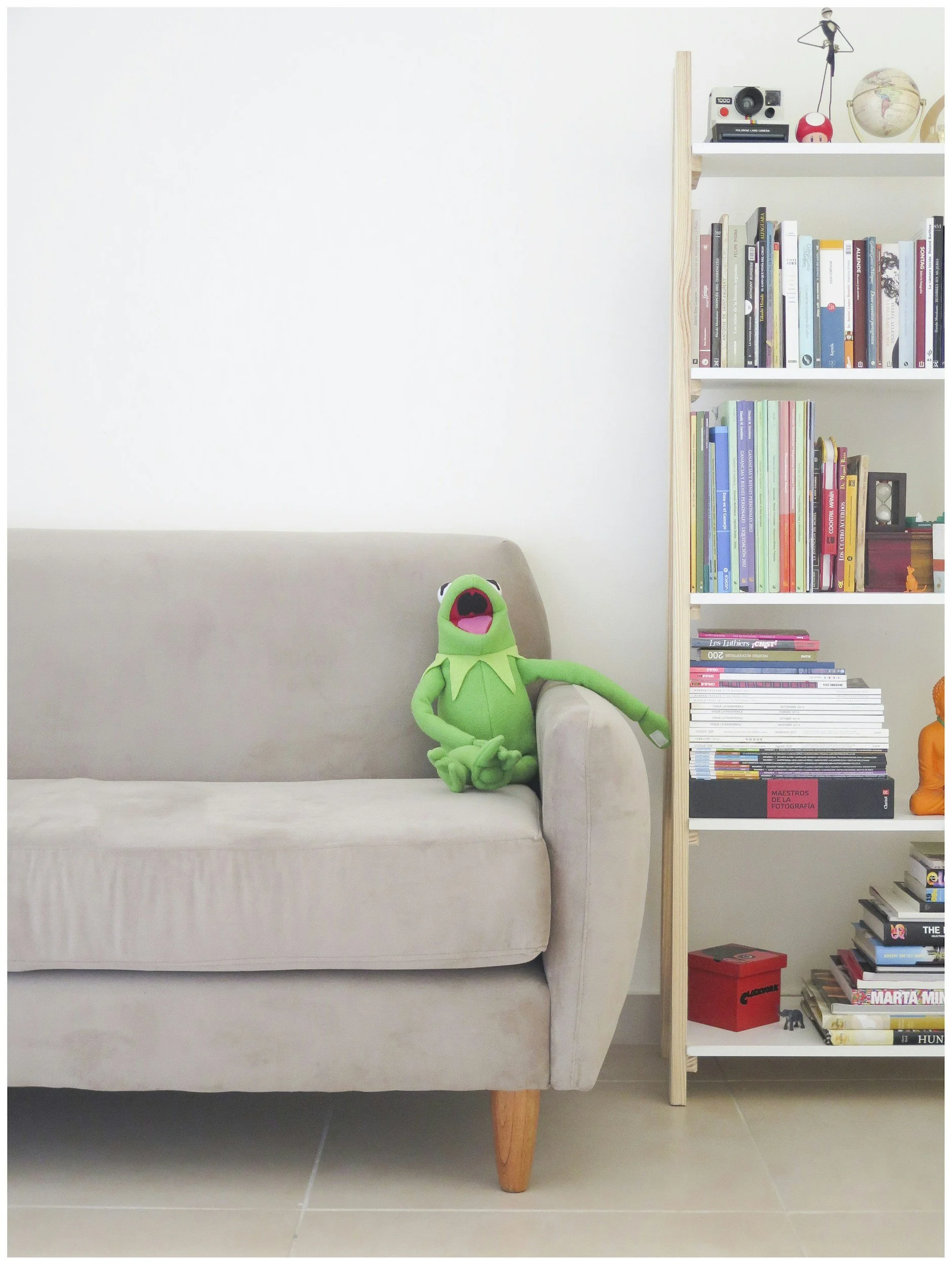
The Teacher’s Role: Student, Mentor, Coach, Advocate, and Occasional Comedian

The communication educator must continually examine relational and structural power dynamics—including their own within the classroom—and embody leadership that resists hegemonic top-down hierarchies.
As Fernback (2014) highlights, “Human and mediated discourses serve or resist extant power perspectives, and these processes must be examined from critical and ethical perspectives [...] Subjugating ourselves to such examination is a difficult but necessary by-product of teaching communication and media studies” (p. 7). Paulo Freire (1970) characterizes this dialogic relationship as forming new meaning: “Through dialogue, the teacher-of-the-students and the students-of-the-teacher cease to exist and a new term emerges: teacher-student with students-teachers” (p. 80).
“I view the role of ‘teacher-student with students-teachers’ as multivalent: a forever student of self and subject; a mentor who models skills; a coach who encourages students to construct their own conclusions through research, critical thinking, and experiential learning; an advocate for respect and justice, inside and outside the classroom; and an authentic human who creates memorable, communal experiences through inclusion, humor, and storytelling.”
This approach aligns with several educational philosophers, including Freire, Neil Postman, Charles Weingartner, John Dewey, Ignatius Loyola, and Parker Palmer. Freire (1970) rejected the “banking model” of education—where students passively receive information deposits from their teacher—and instead promoted critical consciousness through “dialogical and problem-posing education” (p. 40). Postman and Weingartner (1969) proposed a parallel framework, where the teacher’s primary role is to help students cultivate critical inquiry to question institutional norms, interrogate media ecology, and challenge systems of injustice and oppression—or, as they frame it, help students become “experts at ‘crap detecting’” (p. 3). Dewey’s (1938) pragmatism grounds these critical traditions into experiential practice, emphasizing “the organic connection between education and personal experience” (p. 25) and intellectual growth through reflection and self-directed reconstruction (p. 64). Finally, Palmer (1998) states that wholeness comes from integrity and that “good teaching comes from the identity and integrity of the teacher”, while Ignatian pedagogy (International Commission on the Apostolate of Jesuit Education, 1993) promotes “alumnorum cura personalis, a genuine love and personal care for each of our students” (p. 36). Together, these educational traditions encourage teachers to embody authenticity and integrity, cultivating environments where students feel safe, self-aware, and supported to engage in transformative, experiential learning.

Goals and Objectives: Learning Outcomes Across Levels and Subjects
To care for the whole person (cura personalis), setting and assessing goals and objectives should account for students’ diverse life contexts, personal experiences, and academic and professional trajectories across course levels:
Lower-Division Undergraduate (e.g., Public Speaking, Intro to Communication): The goals are to make communication relevant, nurture embodied confidence, and build a critical foundation. Objectives focus on developing core disciplinary vocabulary, active listening and empathy, and interpersonal communication (e.g., teamwork). Students demonstrate competency by mapping their daily reliance on communication, delivering clear but kind peer reviews, analyzing trending media artifacts in small groups, and writing reflective self-assessments on speech anxiety and somatic regulation techniques.
Upper-Division Undergraduate (e.g., Persuasion, Media Literacy, UX Writing): The goals expand to theoretical foundations, critical interrogation, ethical analysis, and tactical execution. Students deconstruct how power and rhetoric operate within interpersonal relationships, institutions, and complex media ecosystems. Objectives challenge students to apply theory to critical media analyses, execute comparative persuasion campaigns, and design customer-facing deliverables, like UX copy.
Graduate and Career Learning (e.g., Pedagogy, Change Leadership): Integrating scholarly and professional knowledge (Fernback, 2014, p. 4), the goals for graduate and adult education are reflective praxis (Dewey, 1938), organizational communication, and teaching as a discipline based in research and student learning (Fernback, 2014, p. 5). Rooted in dialogic co-creation (Freire, 1970), learning objectives leverage student and peer professional experience to bridge theory and research with communication initiatives for organizational change. Students work independently and collaboratively on research projects, facilitate interactive workshops, and create a professional portfolio.

Assessment as Experiential Praxis and Continuous Dialogue
In alignment with Freirean dialogue (Freire, 1970) and Ignatian evaluation, I approach assessment as an ongoing conversation focused on “growth in attitudes, priorities, and actions” that includes and extends beyond academic mastery (ICAJE, 1993, p. 19) . Guided by transparent and accessible grading rubrics, assessments include:
Self-Evaluation: Metacognition is evaluated through reflective writing assignments “which foster attention to experience, reflective understanding beyond self-interest, and criteria for responsible action” (ICAJE, 1993, p. 20).
Co-Creative Dialogue: Ongoing informal and periodic formal check-ins are used to gauge comprehension and pivot instruction based on student questions and needs.
Tangible Deliverables: Skill development is primarily evaluated through practical, relevant assets—such as pitch decks, campaign mockups, or media analysis.

Conclusion
My teaching philosophy is anchored in the belief that the role of communication education is to serve the whole person and advance social justice. Guided by Ignatian cura personalis, Freirean critical consciousness, and Deweyan experiential learning, I cultivate co-creative, dialogic, and relational classrooms where power is shared and students honor their own and each other’s agency. As an educator, my objective is to help students grow into articulate, compassionate, and collaborative communicators who think critically, challenge oppressive hegemony in media and leadership, and advocate for a more just, equitable world.

References
Dannels, D. (2014). Eight essential questions teachers ask: A guidebook for communicating with students. Oxford University Press.
Dewey, J. (1938). Experience and education. Macmillan.
Fernback, J. (2014). Teaching communication and media studies: Pedagogy and practice (1st ed.). Routledge.
Freire, P. (1970). Pedagogy of the oppressed. Herder and Herder.
International Commission on the Apostolate of Jesuit Education. (1993). Ignatian pedagogy: A practical approach. Jesuit Institute.
Palmer, P. J. (1998). The courage to teach: Exploring the inner landscape of a teacher's life.
Jossey-Bass.
Postman, N., & Weingartner, C. (1969). Teaching as a subversive activity. Delacorte Press.
Sovik, R. (2014, May 21). Understanding yourself: The path of svadhyaya. Yoga International. https://yogainternational.com/article/view/understanding-yourself-the-path-of-svadhyaya1/